
Three Partners. One Mission. A Lower Carbon Footprint.
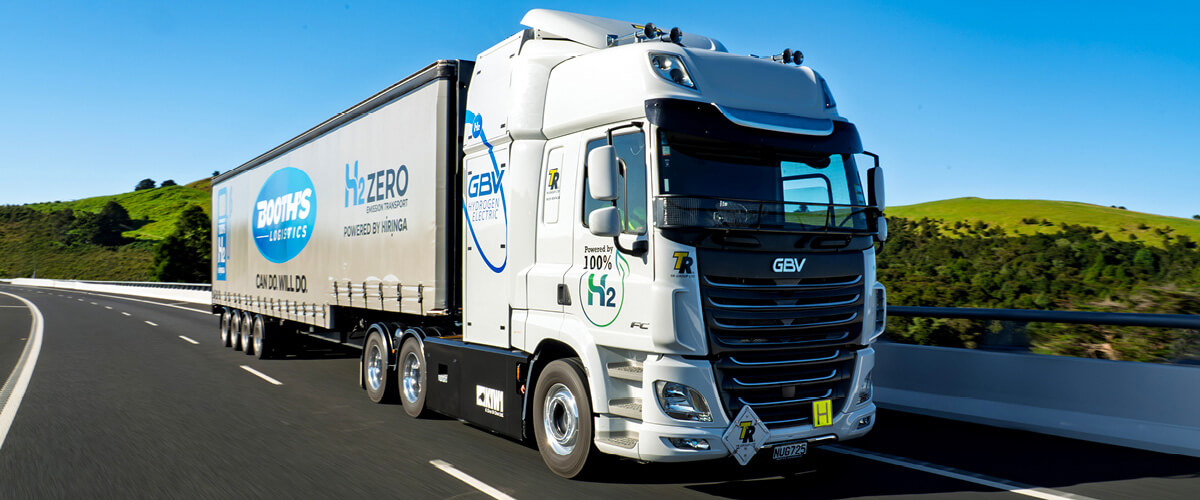
Hiringa Energy, TR Group and Booth’s Logistics demonstrate hydrogen freight in action
Decarbonising heavy transport is one of the biggest challenges facing New Zealand’s freight industry. While the pressure to reduce emissions continues to grow, freight operators still need solutions that deliver the same reliability, range, and performance as traditional diesel fleets - without compromising operational efficiency or commercial viability.
That challenge is exactly what brought Hiringa Energy, TR Group, and Booth’s Logistics together for the Ruakākā solar-to-hydrogen farm project - a practical demonstration of how low-emission freight can work in real-world commercial operations today.
The project centred on transporting 27 container loads of solar panels from the Port of Auckland to Hiringa Energy’s Ruakākā solar-to-hydrogen farm site in Northland. With sustainability at the core of the project, Hiringa Energy approached Booth’s Logistics to deliver the freight with the lowest possible emissions footprint.
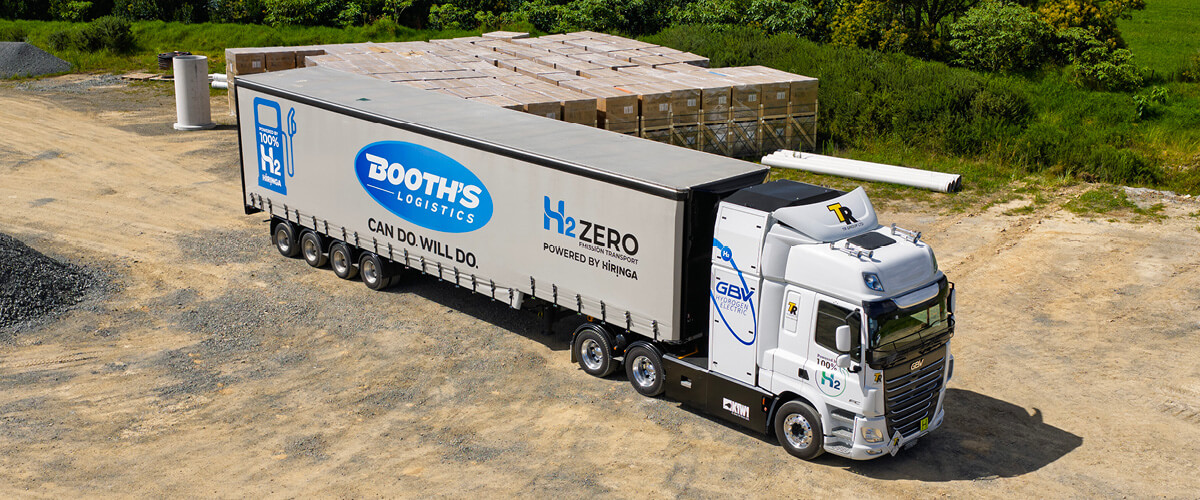
To achieve this, Booth’s Logistics partnered with TR Group to deploy a hydrogen fuel cell truck paired with one of Booth’s existing quad trailer units - creating a closed-loop sustainability outcome where clean energy infrastructure was delivered using clean transport.
“This is New Zealand’s energy transition in action,” says Cathy Clennett, Hiringa Energy Co-Founder and Chair. “The trucks are here, the fuel is available, it has stable pricing and supply, and we have green freight corridors open around the North Island in particular.”

Proving hydrogen freight works in the real world
Over the course of just a few weeks, the hydrogen-powered truck completed 22 round trips between Auckland and Ruakākā - each covering approximately 310km.
The result:
- Approximately 10 tonnes of CO₂ emissions avoided
- 22 successful heavy freight deliveries completed
- Refuelling times of just 15–20 minutes
- Payload and range comparable to a diesel combination
- 100% renewable energy-powered transport
For TR Group, the project highlighted the practical role hydrogen can play in reducing heavy transport emissions without compromising operational performance.
“Hydrogen has emerged as one of the most promising solutions for lowering emissions from heavy transport,” says Grant Doull, Hydrogen Fuel Cell Truck Project Manager at TR Group.
“This collaboration has been an excellent demonstration of that in practice. From an operational perspective, the truck drives, loads and operates very similarly to a diesel unit - but without the tailpipe emissions.”
That familiarity is critical for operators looking to adopt lower-emission technologies without disrupting service delivery or network efficiency.
Sustainability without compromise
For Booth’s Logistics, sustainability is already embedded across the business through emissions tracking, Toitū certification, and continued investment in lower-emission fleet solutions.
“At Booth’s Logistics, our focus is clear - finding ways to reduce our environmental impact without compromising on service,” says Daniel Dalkie, National Linehaul Manager at Booth’s Logistics.
The Ruakākā project demonstrated that hydrogen transport can integrate into existing freight operations with minimal disruption while delivering meaningful emissions reductions.
Importantly, the project also challenged the assumption that low-emission freight comes with a major financial trade-off.
“In this case, the additional cost of using hydrogen compared to diesel was negligible,” says Ryan McDonald from Hiringa Energy. “It added just 5% to the transport cost compared to diesel, equating to less than 0.1% extra cost for the project overall.”
Building a hydrogen ecosystem for New Zealand freight
What made the initiative successful was not just the truck itself, but the alignment across infrastructure, fleet access, and real-world freight operations.
Each partner played a critical role:
- Hiringa Energy is investing in a nationwide hydrogen refuelling network, with stations already operating in Palmerston North, Tauriko, Te Rapa, and Wiri.
- TR Group is enabling access to hydrogen trucks through flexible leasing models that help remove barriers to adoption.
- Booth’s Logistics provided the commercial freight application, proving hydrogen road freight can operate reliably and efficiently in New Zealand conditions.
Together, the partnership demonstrated how renewable energy generation, hydrogen infrastructure, and transport operators can work together to support a lower-carbon freight future.
A blueprint for the future of freight
The Ruakākā project represents more than a single successful freight operation - it provides a blueprint for the wider transport industry.
It proves that low-emission heavy freight is achievable today, that operational performance does not need to be sacrificed, and that meaningful progress happens when infrastructure providers, fleet partners, and operators work together.
As hydrogen networks continue to expand across New Zealand, projects like this show how the freight sector can move toward a more sustainable future - one journey at a time.

About the author
Shane O'Grady
Shane has been with TR Group since 2014 as our National Sales & Marketing Manager. He is responsible for leading TR Group’s sales efforts, focusing on growing our nationwide footprint and customer base. In addition he drives our marketing and branding strategy across Australia and New Zealand aimed at building TR’s brand and awareness in the heavy commercial vehicle rental and lease space. He leads a team that are passionate about trucks, people and creating long term customer relationships.